ja SCHMERZEN und wieeeeeeeeeee

Übersicht mit KI
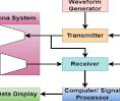
Sequential modeling and iterative learning methods enable dynamic, real-time adaptation in modern engineering systems. They allow algorithms to process information over time and continuously refine their performance. When applied to cognitive radar, this facilitates intelligent, biological-like adaptation to complex and unpredictable environments. [1, 2]1. Sequential ModelingSequential modeling refers to algorithms that analyze, predict, or generate data where the order of events matters.
- How it works: Rather than treating individual data points as independent, sequential models consider the temporal context and history of previous states.
- Radar context: Used in Recurrent Neural Networks (RNNs) or Long Short-Term Memory (LSTM) networks to track moving targets, filter out clutter, and predict a target’s future kinematic state based on a sequence of historical echoes. [1]
2. Online and Iterative LearningThese are machine learning and optimization techniques designed to update a system’s parameters continuously rather than training it in a single static, offline batch.
- Online learning: The system continuously updates its model with every new streaming data point in real-time, adapting instantly to changes in the surrounding environment. [1]
- Iterative learning: The system uses repeated cycles of operation, evaluating its previous output to refine and calculate a better parameter state (often using algorithms like Gradient Descent or Q-learning). In Cognitive Tracking Radar, online meta-learning is used to iteratively select the best transmission waveform for a new tracking task based on past experiences. [1, 2]
3. Cognitive RadarA cognitive radar goes beyond traditional „adaptive“ systems. By using the biological Perception-Action Cycle, the radar continuously explores, learns, and optimizes its own behavior. [1, 2]
- The Cycle: It receives echoes, interprets the environment (Perception), and dynamically adjusts its future actions (like transmitting a uniquely optimized waveform) to achieve a specific mission goal. [1, 2]
- Function: It essentially „thinks“ and alters its own parameters (such as pulse repetition frequency or bandwidth) on the fly in response to changing weather, terrain, or electronic jamming. [1, 2]
4. Adaptive Hardware and Antenna DesignTo execute the rapid parameter changes instructed by the cognitive processing unit, the hardware itself must be physically reconfigurable.
- Hardware: Utilizes Software-Defined Radios (SDR) and high-speed digital-to-analog converters that can instantly generate entirely new, custom waveforms on a pulse-to-pulse basis. [1]
- Antenna Design: Relies on Phased Arrays and Reconfigurable Metasurfaces. These can dynamically alter their beam shapes, radiation patterns, and polarization in milliseconds to focus on a target, sweep an area, or avoid spatial interference.
5. Cognitive Process ModelingThis involves creating computational models that replicate human-like cognition, attention, and memory within machine frameworks.
- Layered Execution: Uses architectural models (like Rasmussen’s three-layer model) broken down into skill-based (adaptive signal processing), rule-based (resource allocation), and knowledge-based (mission planning) layers. [1]
- Adaptive Intelligence: By integrating models based on Reinforcement Learning and Bayesian tracking, the radar can prioritize which target requires attention, allocate computational resources effectively, and learn from its operational „mistakes“ to improve future decision-making. [1, 3]
Would you like to explore how Reinforcement Learning algorithms specifically drive the perception-action cycle, or are you more interested in the hardware differences between traditional phased array antennas and modern adaptive metasurfaces?